
When Should You Clean Your Pool Filter?
You should clean your pool filter when the pressure gauge reads 8 to 10 PSI higher than its clean starting pressure, not simply on a set schedule. This pressure increase indicates the filter has collected enough debris to restrict water flow, reducing filtration efficiency and putting extra strain on your pool equipment.
A clean filter is one of the most important parts of a healthy swimming pool. At Good Neighbor Pool Care, we help homeowners protect their pools with routine maintenance that includes monitoring filter performance, inspecting equipment, and keeping water crystal clear. While many pool owners focus on chlorine and pH, the filter quietly does the heavy lifting by removing dirt, leaves, pollen, insects, and other contaminants. Knowing when to clean your pool filter helps improve water quality, extend the life of your equipment, and prevent costly repairs. Our experienced technicians know exactly what to look for, ensuring your filtration system continues operating at peak performance all season long.
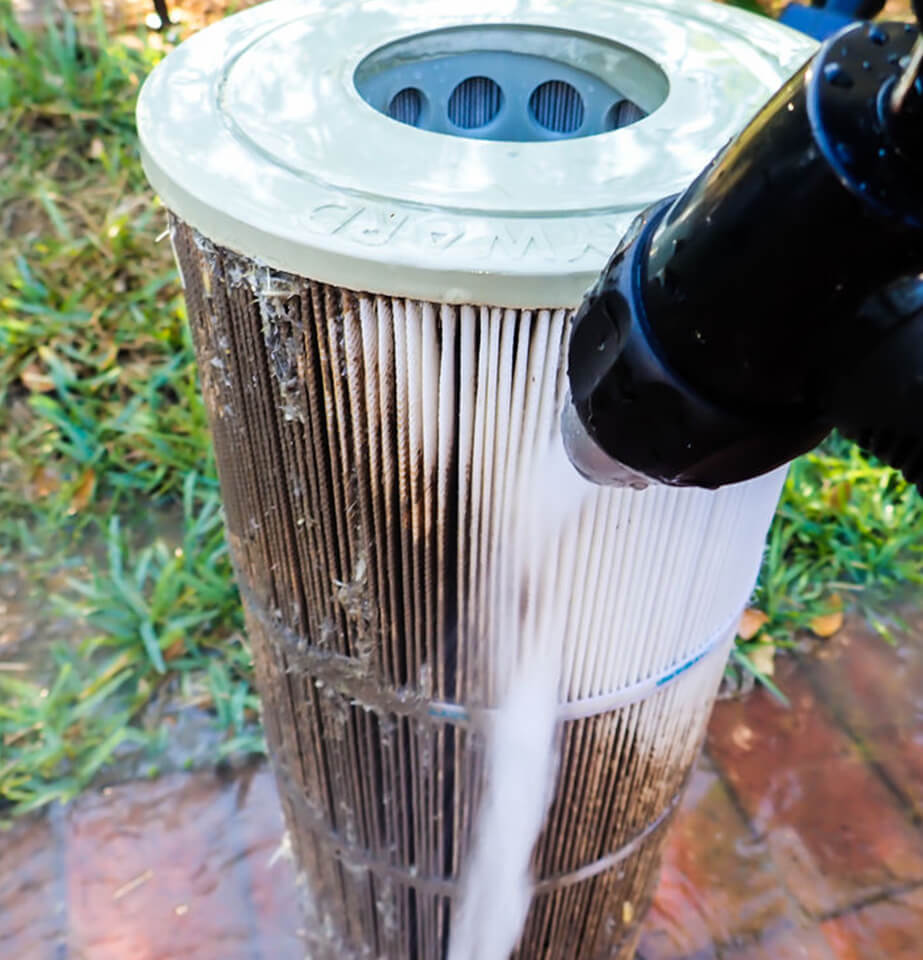
Why Cleaning Your Pool Filter at the Right Time Matters
A properly maintained pool filter keeps water circulating efficiently and removes contaminants before they become larger problems.
Waiting too long to clean your filter can lead to:
- Cloudy water
- Poor water circulation
- Increased algae growth
- Higher pump pressure
- Reduced energy efficiency
- Premature equipment wear
Cleaning too often is not ideal either. A slightly dirty filter can actually trap smaller particles more effectively than a brand-new one. The key is cleaning it when the pressure gauge tells you it’s time, not simply because the calendar says so.
How Do You Know Your Pool Filter Needs Cleaning?
The pressure gauge is the most reliable indicator.
Pool manufacturers, including Pentair, recommend cleaning most filters once pressure rises 8 to 10 PSI above the clean starting pressure. Record the pressure immediately after installing or thoroughly cleaning your filter. That number becomes your baseline for future maintenance.
Other signs your filter may need attention include:
- Cloudy or dull water
- Weak return jets
- Longer cleaning cycles
- Visible debris remaining in the pool
- Poor water circulation
These symptoms often appear after the filter has become clogged with debris.
Does the Type of Pool Filter Affect How Often It Needs Cleaning?
Yes. Different filter systems require different maintenance methods.
Cartridge Filters
- Remove and rinse when pressure increases 8 to 10 PSI.
- Deep clean with a filter cleaner several times per year.
- Replace cartridges every 2 to 3 years, depending on condition.
Sand Filters
- Backwash when pressure rises 8 to 10 PSI.
- Replace filter sand approximately every 3 to 5 years.
DE (Diatomaceous Earth) Filters
- Backwash when pressure increases.
- Recharge with fresh DE powder after backwashing.
- Perform a complete internal cleaning at least annually.
Although maintenance methods differ, the pressure gauge remains the best indicator for all three filter types.
What Can Make Your Pool Filter Get Dirty Faster?
Several factors can shorten the time between cleanings.
These include:
- Heavy swimmer use
- Storms and windy weather
- Falling leaves and pollen
- Nearby trees
- Algae blooms
- Construction dust
- High sunscreen and body oil levels
If your pool experiences any of these conditions, check the pressure gauge more frequently rather than waiting for a scheduled cleaning date.
What Happens If You Don’t Clean Your Pool Filter?
A neglected filter cannot effectively remove debris from your water.
Over time, this can lead to:
- Increased pump strain
- Reduced water circulation
- Higher electricity costs
- Cloudy water
- More chemical usage
- Algae growth
- Shortened equipment lifespan
According to Pentair, the pressure gauge is the primary indicator of filter performance, making regular monitoring one of the easiest ways to prevent unnecessary equipment damage.
Best Practices for Pool Filter Maintenance
Good filter care goes beyond simply rinsing the filter when it looks dirty.
To maximize filtration performance:
- Record your clean starting PSI.
- Check the pressure gauge weekly.
- Clean the filter when pressure rises 8 to 10 PSI.
- Inspect filter media for damage during cleaning.
- Replace worn cartridges or media when necessary.
- Keep proper water chemistry to reduce unnecessary filter buildup.
Routine professional pool service makes these inspections part of every maintenance visit, helping identify small problems before they become expensive repairs.
Frequently Asked Questions
Should I clean my pool filter every month?
Not necessarily. The best time to clean your pool filter is when the pressure gauge reads 8 to 10 PSI above its clean starting pressure, regardless of how much time has passed.
Can a dirty pool filter make the water cloudy?
Yes. A clogged filter cannot remove fine debris effectively, which often results in cloudy or hazy water.
How long does a pool filter last?
The filter housing can last many years, while the filter media varies. Cartridge filters typically last 2 to 3 years, sand generally lasts 3 to 5 years, and DE grids often last 5 to 10 years with proper maintenance.
Should I clean my filter after treating algae?
Yes. Algae can clog a filter quickly. After an algae treatment, monitor the pressure gauge closely and clean or backwash the filter as needed to restore proper water flow.
Keep Your Pool Filter Working at Its Best
Your pool filter is the heart of your circulation system, and keeping it clean is one of the simplest ways to protect your investment. If you’re unsure whether your filter needs cleaning or you’d rather leave routine maintenance to the professionals, Good Neighbor Pool Care is here to help.
Ready for crystal-clear water and worry-free maintenance? Contact Good Neighbor Pool Care today to schedule professional pool service.