
Is Professional Pool Service Worth It Compared With DIY Pool Maintenance?
Professional pool service is worth it for homeowners who want consistent water chemistry, routine equipment checks, reliable cleaning, and less time spent maintaining their pool. DIY pool maintenance can cost less upfront and works well for knowledgeable owners with time to test and clean regularly, but professional service reduces guesswork and can catch developing problems before they become expensive repairs.
Owning a pool should mean more time swimming and less time troubleshooting cloudy water, clogged filters, or confusing chemical readings. Good Neighbor Pool Care is a family-owned and operated pool service company serving homeowners throughout Collin County, with trained and certified technicians who handle routine cleaning, water chemistry, equipment inspections, repairs, and more. Whether you prefer professional weekly service or want to learn how to maintain your own pool, the goal is the same: safe water, dependable equipment, and a pool that is ready when your family wants to use it. Good Neighbor Pool Care even offers Pool School Training for homeowners who want hands-on instruction for maintaining their specific pool system.
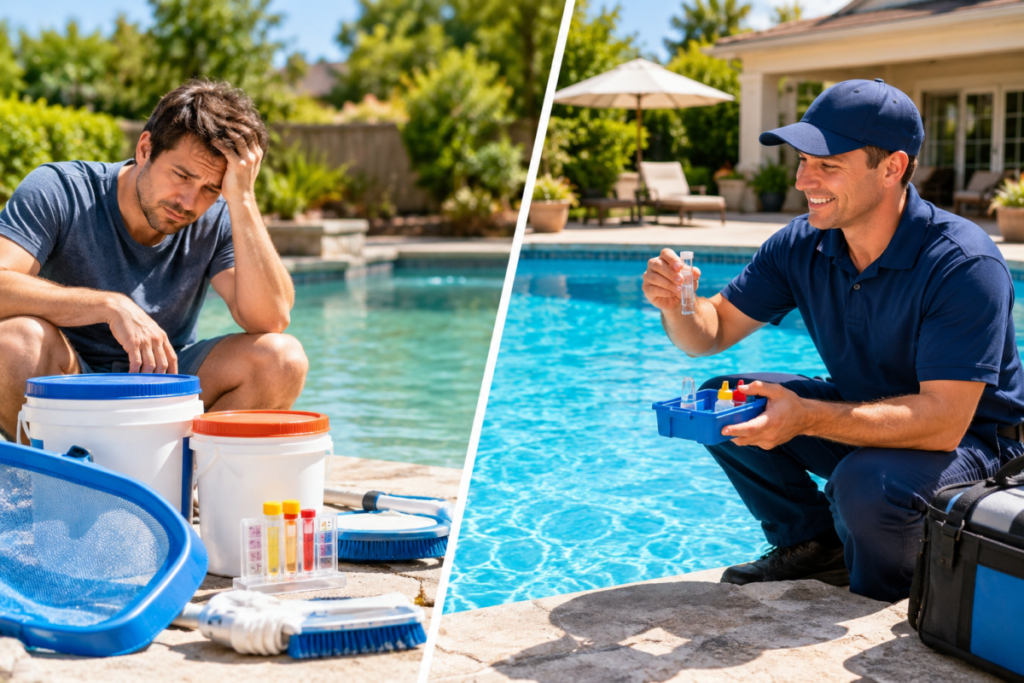
DIY Pool Care vs Professional Pool Maintenance
The biggest difference between DIY and professional pool maintenance is responsibility. With DIY maintenance, the homeowner handles testing, chemical adjustments, cleaning, equipment monitoring, and troubleshooting. Professional service places those recurring responsibilities in the hands of trained technicians.
Neither option is automatically right for every homeowner. The better choice depends on your experience, available time, pool equipment, and willingness to maintain a consistent schedule.
What Does DIY Pool Maintenance Actually Require?
DIY pool maintenance requires more than occasionally adding chlorine and removing leaves. Pool owners need to consistently monitor water chemistry, circulation, cleanliness, and equipment performance.
A typical maintenance routine can include:
- Testing chlorine and pH
- Adjusting pool chemicals when necessary
- Skimming leaves and floating debris
- Brushing pool walls, steps, and other surfaces
- Vacuuming debris from the pool floor
- Emptying skimmer and pump baskets
- Monitoring filter pressure
- Cleaning or backwashing the filter when needed
- Checking the pump and equipment for leaks or unusual operation
- Adjusting equipment operation as seasonal conditions change
Water testing is especially important. The Centers for Disease Control and Prevention states that chlorine and pH are a pool’s first defense against germs. The CDC recommends a pH between 7.0 and 7.8 and at least 1 ppm of chlorine in pools, or at least 2 ppm when cyanuric acid is being used.
The CDC also recommends that residential pool owners test chlorine concentration and pH at least twice per day, and more frequently when many people are using the pool. That recommendation illustrates why maintaining consistently safe water requires more attention than many new pool owners initially expect.
What Are the Benefits of Professional Pool Service?
Professional pool service provides consistency, expertise, and preventative oversight in addition to cleaning.
Good Neighbor Pool Care’s weekly service includes water chemistry testing and adjustment, vacuuming, skimming, brushing, basket cleaning, equipment inspections, seasonal adjustments, and documentation of service visits.
The major benefits include:
- Consistent water chemistry: Regular testing and adjustments help prevent large swings in chlorine, pH, alkalinity, and other important water conditions.
- Routine equipment monitoring: A technician can watch circulation, filter pressure, leaks, and cleaner performance for signs that something is changing.
- Early problem detection: A small leak, circulation problem, or unusual pressure reading may be easier to address before it develops into an equipment failure.
- Reliable cleaning: Skimming, brushing, vacuuming, and debris removal happen on a regular schedule instead of whenever the homeowner finds time.
- Less work for the homeowner: Professional service allows homeowners to spend more of their free time enjoying their pool instead of maintaining it.
Regular maintenance can also help protect expensive equipment. Proper water balance, good circulation, clean baskets, and timely repairs reduce unnecessary stress on pumps, filters, heaters, salt systems, and other components.
Is DIY Pool Maintenance Really Cheaper?
DIY pool maintenance usually has lower direct labor costs, but the true cost includes chemicals, testing supplies, cleaning equipment, replacement parts, and your time.
DIY maintenance may be economical when you already understand your pool’s chemistry and equipment. Mistakes, however, can quickly reduce those savings. Adding the wrong amount of chemicals, ignoring poor circulation, failing to recognize a leak, or allowing algae to develop can lead to additional chemical treatments or repairs.
Water chemistry also affects more than appearance. The CDC notes that when pH drops below 7.0, pool pipes are more likely to corrode or break down. When pH rises, chlorine becomes less effective at killing germs.
For homeowners comparing DIY pool maintenance vs professional service, the question should therefore be more than, “Which costs less this week?” A better question is, “Which option can I maintain correctly and consistently over the long term?”
When Should You Hire a Professional Pool Service?
Professional pool service makes the most sense when maintaining the pool consistently is becoming difficult, confusing, or time-consuming.
Consider professional maintenance if:
- Your water frequently becomes cloudy or green.
- You struggle to maintain consistent chlorine or pH levels.
- Your pool requires frequent chemical corrections.
- You are unsure how your pump, filter, heater, or automation system works.
- You do not have time for regular cleaning and water testing.
- Your equipment is leaking or making unusual noises.
- You want someone routinely checking equipment performance.
- You would rather spend your free time enjoying the pool.
Good Neighbor Pool Care performs equipment checks during weekly service, including circulation, filter pressure, potential leaks, and automatic cleaner performance. If something appears wrong, the homeowner can be informed before additional repair work is performed.
Can You Maintain Your Own Pool and Still Use a Professional?
Absolutely. Pool maintenance does not have to be completely DIY or completely professional.
Some homeowners enjoy handling weekly maintenance but want professional help with repairs, equipment upgrades, difficult chemistry problems, seasonal needs, or occasional deep cleaning. Others simply need instruction before taking over maintenance themselves.
Good Neighbor Pool Care offers Pool School Training specifically for homeowners who want to understand their pool. Training covers water chemistry, debris removal, brushing, proper water flow, basket maintenance, equipment operation, and other practical skills. The instruction is tailored to the homeowner’s actual equipment and plumbing instead of relying on generic advice.
This hybrid approach can provide the independence of DIY maintenance while giving homeowners access to professional expertise when they need it.
FAQ: DIY vs Professional Pool Service
How hard is it to maintain a pool yourself?
Pool maintenance is manageable for homeowners who understand water chemistry, equipment operation, and cleaning requirements and can follow a consistent schedule. The learning curve can be steeper for first-time pool owners or pools with complex equipment.
How often should pool water be tested?
The CDC recommends that residential pool owners test chlorine concentration and pH at least twice daily and more often when the pool is heavily used. Regular testing allows chemistry problems to be corrected before they become more significant.
Is weekly professional pool service worth the money?
Weekly pool service can be worthwhile if you value consistent cleaning, professional chemistry management, routine equipment checks, and saving personal time. It may also help identify developing equipment problems earlier.
Can I learn to maintain my pool myself?
Yes. Homeowners can learn proper pool maintenance when they understand their particular equipment and water chemistry requirements. Good Neighbor Pool Care’s Pool School Training is designed for homeowners who want hands-on guidance for maintaining their own pool.
Spend More Time Enjoying Your Pool
DIY pool maintenance can be a practical choice for homeowners who have the knowledge, tools, and time to stay consistent. Professional pool service is often the better fit for homeowners who want dependable maintenance, expert oversight, and fewer pool chores competing for their free time.
Good Neighbor Pool Care provides weekly pool cleaning and maintenance, equipment services, one-time cleaning, and Pool School Training to give homeowners the level of support that works best for them.
Ready to Spend Less Time Maintaining Your Pool? Contact Good Neighbor Pool Care Today!