
Why Is My Automatic Pool Cleaner Not Moving? Common Causes and Fixes
An automatic pool cleaner may stop moving because of low suction, insufficient water pressure, clogged hoses, worn components, or problems with the pool’s circulation system. Robotic cleaners can also stop because of electrical or motor issues. Checking water flow, removing debris, and inspecting the cleaner’s parts can help identify the problem and determine whether professional repair is needed.
Automatic pool cleaners make pool ownership easier by removing dirt, leaves, and debris without constant manual cleaning. When your cleaner suddenly stops moving, however, keeping your pool clean can quickly become a frustrating chore. At Good Neighbor Pool Care, we understand how important dependable equipment is to maintaining a beautiful, swim-ready pool. Our family-owned business provides professional pool cleaner repair and maintenance services, helping homeowners identify equipment problems and get their cleaners working properly again. Whether your cleaner is stuck in one spot, moving slowly, or refusing to operate altogether, our experienced team can help determine what’s causing the issue. With professional diagnosis, reliable repairs, and a customer-focused approach, we’re committed to making pool maintenance easier and more convenient.
Common Automatic Pool Cleaner Problems and How to Fix Them
Automatic pool cleaners depend on proper water flow, functioning components, and clear pathways to move efficiently throughout your pool. When one of these systems isn’t working correctly, the cleaner may stop, move inconsistently, or fail to collect debris.
Understanding the most common causes can help you troubleshoot the problem before it becomes a more expensive repair.
1. Can Low Suction or Water Pressure Stop a Pool Cleaner From Moving?
Yes, insufficient suction or water pressure is one of the most common reasons an automatic pool cleaner stops moving. Suction-side cleaners rely on water being pulled through the cleaner, while pressure-side models use pressurized water to power their movement.
If the water flow is too weak, the cleaner may move slowly, stop completely, or struggle to collect debris.
Common causes of low suction or pressure include:
- Clogged skimmer or pump baskets
- Dirty or restricted pool filters
- Low pool water levels
- Air leaks in suction-side plumbing
- Incorrect valve settings
- Booster pump problems on pressure-side cleaners
What to do: Start by checking your pool’s water level and removing debris from the skimmer and pump baskets. Inspect the filter and verify that the circulation pump is operating correctly.
If you have a pressure-side cleaner, confirm that its booster pump is functioning according to the manufacturer’s instructions.
The U.S. Department of Energy emphasizes the importance of properly operating pool pumps and circulation systems for efficient pool performance. Maintaining adequate water flow helps support both filtration and compatible automatic cleaning equipment.
If your cleaner still isn’t moving after basic circulation checks, a professional inspection can help identify hidden restrictions or equipment problems.
2. Why Does My Pool Cleaner Stop Moving When the Hose Gets Clogged?
A blocked or damaged hose can prevent an automatic pool cleaner from receiving the water flow it needs to move. Leaves, twigs, and other debris can become trapped inside the hose or cleaner intake, restricting circulation.
Hose problems may also cause the cleaner to move unpredictably or remain stuck in one section of the pool.
Common warning signs include:
- The cleaner starts moving but suddenly stops.
- The hose appears twisted, kinked, or tangled.
- Debris remains trapped inside the cleaner.
- The cleaner repeatedly gets stuck near pool steps or corners.
- Cracks or loose connections are visible along the hose.
What to do: Turn off the pool equipment before disconnecting hoses or removing the cleaner. Inspect accessible hose sections for blockages, cracks, and damaged connections.
Remove debris carefully and reconnect the hose according to the manufacturer’s instructions.
Also check whether the hose length is appropriate for your pool. A hose that’s too short may prevent full coverage, while excessive hose length can contribute to tangling.
Regular hose inspections can help prevent recurring movement problems and improve cleaning performance.
3. Can Worn Pool Cleaner Parts Cause It to Stop Working?
Yes, worn or damaged components can prevent an automatic pool cleaner from moving even when water flow is adequate. Over time, constant exposure to pool chemicals, sunlight, and normal operation can wear down essential parts.
The specific components depend on the type and model of cleaner.
Parts that commonly experience wear include:
- Wheels and tires: Worn tires may lose traction and prevent the cleaner from moving effectively.
- Tracks: Damaged tracks can cause some cleaners to stop or move unevenly.
- Diaphragms: Torn diaphragms in certain suction-side cleaners can interrupt movement.
- Turbines and gears: Worn internal components may prevent the cleaner from converting water flow into movement.
- Bearings and drive assemblies: Mechanical wear can interfere with normal operation.
What to do: With the equipment turned off and the cleaner removed from the pool, inspect accessible parts for visible wear, cracks, or missing components.
Some replacement parts are relatively inexpensive, but internal repairs may require specialized knowledge.
If your cleaner has stopped moving despite adequate suction or pressure, professional pool cleaner repair can help determine whether a specific component needs replacement.
Addressing worn parts early may also help prevent additional damage to connected components.
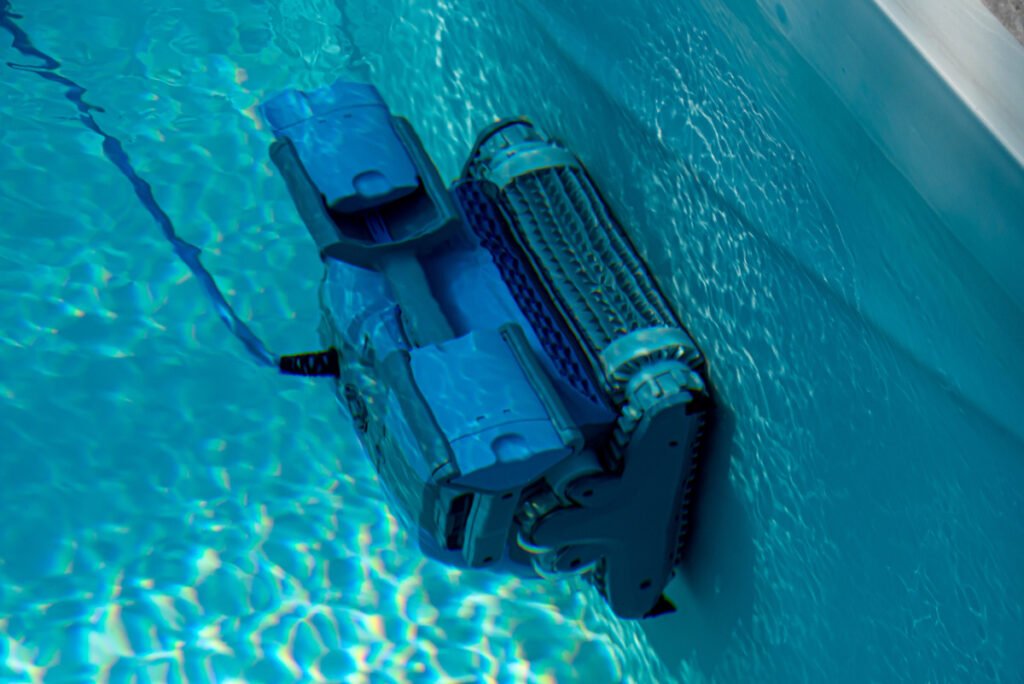
4. Why Is My Robotic Pool Cleaner Not Moving?
Robotic pool cleaners may stop moving because of power supply problems, tangled cables, clogged internal filters, or malfunctioning drive motors.
Unlike suction-side and pressure-side cleaners, robotic models operate independently of the pool’s main circulation system. They typically use an external power supply, electric motors, and onboard filtration.
Common robotic pool cleaner problems include:
- The power supply isn’t receiving electricity.
- The cleaning cycle has ended or wasn’t started correctly.
- The cable is tangled or damaged.
- Debris is blocking the tracks or wheels.
- The internal filter basket is full.
- A motor or electronic component has malfunctioned.
What to do: Check the power supply indicator and confirm that the cleaning cycle is properly selected. Follow the manufacturer’s instructions for safely removing the cleaner from the water and inspecting its filter basket, tracks, and cable.
Never handle damaged electrical connections near water or open sealed electrical components yourself.
If the cleaner has power but won’t move, a qualified repair technician can inspect the drive system and identify potential motor or electronic failures.
5. When Should You Call a Professional for Pool Cleaner Repair?
Professional pool cleaner repair is recommended when basic troubleshooting doesn’t restore movement or when the cleaner shows signs of mechanical, electrical, or circulation-related problems.
Some issues, such as removing leaves from a basket, are simple maintenance tasks. Others require specialized tools, replacement parts, or an understanding of how the cleaner interacts with the pool’s equipment.
Consider scheduling professional service if:
- Your cleaner won’t move despite adequate suction or pressure.
- The cleaner repeatedly stops during operation.
- Wheels, gears, or internal components appear damaged.
- A booster pump isn’t operating correctly.
- A robotic cleaner displays persistent error codes.
- The cleaner requires frequent adjustments to function.
Professional diagnosis helps identify the underlying problem rather than relying on guesswork.
At Good Neighbor Pool Care, we repair suction-side, pressure-side, and robotic pool cleaners. Our team can inspect your cleaner, identify worn or damaged components, and recommend practical repair solutions.
Routine maintenance can also help reduce the likelihood of future breakdowns. Cleaning debris baskets, inspecting hoses, and monitoring equipment performance are simple ways to support reliable operation.
Frequently Asked Questions About Automatic Pool Cleaners
Why is my pool cleaner getting suction but not moving?
A suction-side pool cleaner may have adequate suction but still fail to move because of a clogged intake, worn diaphragm, damaged turbine, or internal mechanical problem. Inspect accessible components and consult the manufacturer’s troubleshooting instructions.
How long do automatic pool cleaners usually last?
Many automatic pool cleaners last approximately 3 to 7 years, although lifespan varies by cleaner type, brand, usage, water chemistry, and maintenance. Regular cleaning and timely replacement of worn parts can help extend their useful life.
Is it worth repairing an automatic pool cleaner?
Repair is often worthwhile when the cleaner is relatively new and the problem involves a replaceable hose, wheel, diaphragm, or other component. Replacement may be more practical when repair costs are high or the cleaner has multiple failing parts.
How often should I inspect my automatic pool cleaner?
Inspect your automatic pool cleaner regularly for debris buildup, tangled hoses, and visible wear. A quick check after cleaning cycles, along with periodic professional inspections, can help identify problems before they interrupt operation.
Get Your Automatic Pool Cleaner Moving Again With Good Neighbor Pool Care
A pool cleaner that stops moving can leave dirt, leaves, and debris collecting on the bottom of your pool. Fortunately, many common problems can be resolved with proper maintenance, replacement parts, or professional repairs.
At Good Neighbor Pool Care, we’re committed to helping homeowners keep their automatic pool cleaners running efficiently. Our family-owned business provides dependable pool cleaner repair services with a focus on accurate diagnosis, affordable solutions, and friendly customer care.
Whether your cleaner has lost suction, stopped moving, or developed mechanical problems, our team is ready to help.
Is your automatic pool cleaner not moving? Don’t let a malfunctioning cleaner make pool maintenance harder than it needs to be!
Contact Good Neighbor Pool Care today to schedule a professional pool cleaner inspection or repair and get back to enjoying a clean, inviting pool.